

Historical Delegations
Collecting Jewish folk narratives in Bet She'an
During the years 1977-1979, a team of folklorists collected Jewish folk narratives in the development town of Bet She’an. The team was comprised of residents of the town and its surrounding area, and academics from Hebrew University in Jerusalem, the University of Haifa and IFA. This team was the first of its kind in Israel. For 8 days they took up residence in the town and immersed themselves in their work environment. The then mayor of Bet She’an, Itzhak Keinan, wrote about the special feelings this unique meeting held for all of the participants:
“Not every day does an entire town, its fathers and sons, unite to collect and save the stories and legends from their former homelands. During these long sessions, lasting late into the night, sat a generation of storytellers, a generation of translators and a generation of collectors together with academics – laborers with researchers – and in spite of their differences, the meetings were natural and heartfelt. A common language was found between Prof. Doy Noy and Rabbi Turgeman, between Dr. Aliza Shenhar and Haya Bar-Itzhak with Mrs. Haviva Dayan and Zahava Buchbut” (Shenhar & Bar Itzhak, 1981, p. 7).
The way the team worked was a resounding success. Over 300 folk narratives were recorded by IFA staff, the majority during 2 weeks of intensive work (210 folk tales between 17.01.78 and 3.02.78).
The Bet She’an Folktale Narrative Collection Project set before itself several goals. Amongst them: collecting oral folk narratives from first hand sources, elevating an awareness of the importance of cultural heritage, and providing students firsthand experience in collecting and recording folk narratives. All of the tales collected were saved in the archives, with a portion of them published. The project’s format became a model for similar future endeavors.
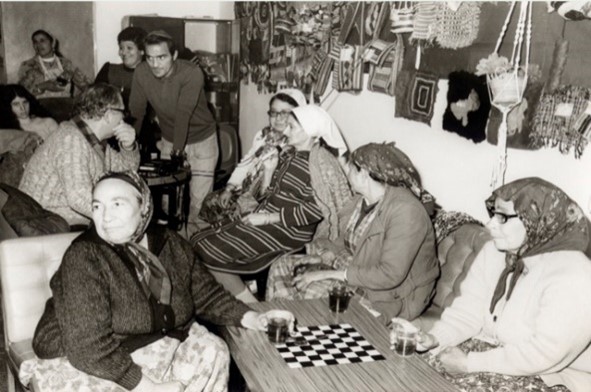
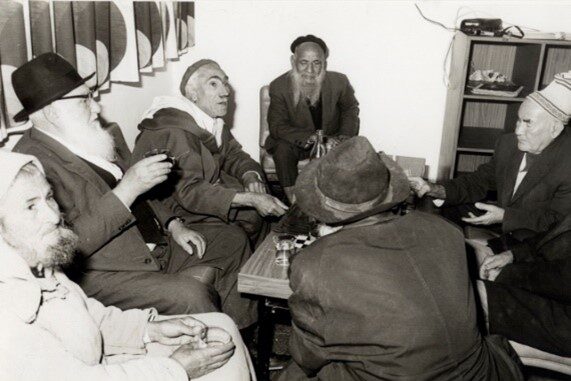
Collecting folk narratives in the town of Shlomi
Between 1979 and 1981, Shlomi Township was designated a “research workshop” for the University of Haifa, during which time 100 folk narratives were collected. Numerous researchers from various disciplines were involved: folklore (examined methods of field recording, storytelling and narrative questionnaires); poetry; material culture; historical and linguistic documentation. Collected stories were recorded in their original languages. Video cameras recorded elderly storytellers with all their nuances and embellishments.
Research centered around two central aspects: textual research (examined the aesthetic quality of the tales, genre distribution, versions, similarities to other tales, and their absorption into Israeli society); and, contextual aspects i.e. the storyteller’s performance art, the narration context, and the communicative processes which occur during a the storytelling event.
The research was bi-directional, with the University of Haifa contributing to Shlomi’s cultural spirit. Folklore and folktale interest groups arose which actively discussed various aspects of folklore – material culture, ethnomusicology, folk narratives and anthropology.